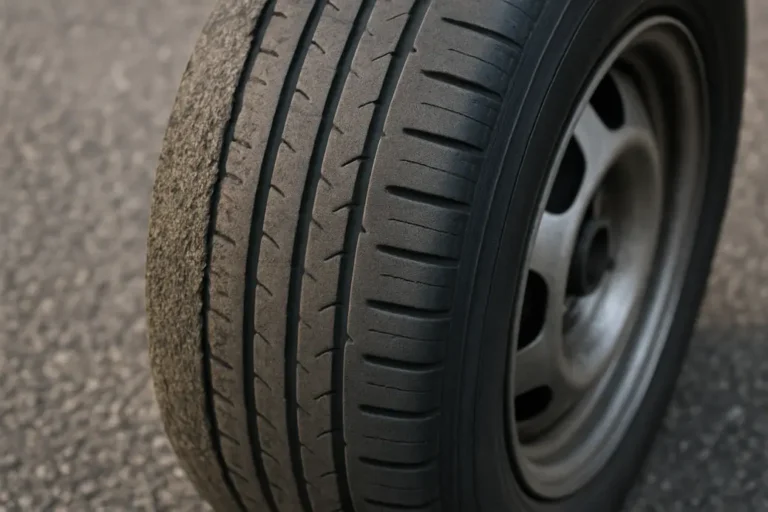
What is tire rolling resistance and how does it influence tire type fuel economy?
Tire rolling resistance is the force that opposes a tire’s motion as it rolls on a surface. It directly influences tire type fuel economy by affecting how much energy a vehicle needs to keep moving; lower rolling resistance means less energy is required, improving fuel efficiency.
Rolling resistance arises mainly from the deformation of tires as they contact the road. Softer or heavily constructed tires deform more, increasing resistance and fuel consumption. Manufacturers often rate tires for rolling resistance, enabling consumers to compare their fuel economy impact. Reducing rolling resistance can improve a vehicle’s miles per gallon (MPG) by a measurable amount, making it a critical factor in selecting tires designed for better fuel economy.

How do different types of tires impact fuel efficiency and gas mileage?
Different types of tires impact fuel efficiency and gas mileage through variations in design, rubber compounds, and tread patterns. Fuel-efficient tire types typically feature low rolling resistance materials and streamlined tread designs that reduce energy loss during motion.
For example, all-season tires designed for balanced performance often have moderate fuel-saving benefits, while specialised fuel-saving tires use advanced compounds and construction to minimise rolling resistance without sacrificing safety. Winter tires generally have higher rolling resistance due to softer compounds and aggressive treads, reducing fuel efficiency. The choice of tire affects gas mileage as follows:
- Low rolling resistance tires: maximise fuel economy by reducing energy loss
- High-performance tires: may reduce fuel efficiency due to sticky compounds and wider tread
- Off-road tires: increased rolling resistance from aggressive tread patterns impacts fuel use negatively
Understanding these distinctions helps drivers select tires that best suit their fuel economy goals while considering driving conditions.
What do tire fuel economy ratings or labels reveal about energy-efficient tires?
Tire fuel economy ratings or labels provide a clear indication of a tire’s rolling resistance and its relative fuel-saving ability. These ratings reveal how much energy-efficient tires reduce fuel consumption compared to standard tires, often expressed in fuel economy grades or numerical scores.
Labels typically rank tires on a scale reflecting their rolling resistance, allowing consumers to compare models objectively. An energy-efficient tire will have a lower rolling resistance rating, meaning it requires less engine power to maintain speed, contributing to improved gas mileage. These labels also help identify tires certified by regulatory or industry bodies for meeting specific fuel efficiency standards, aiding consumers in informed decision-making.
How do grip, noise, and other factors affect the fuel economy of tires?
Grip, noise, and other factors affect the fuel economy of tires by influencing rolling resistance and energy loss during driving. High grip tires often use softer rubber compounds and larger contact patches, which increase rolling resistance and reduce fuel efficiency.
Tire noise, generated by tread pattern and road interaction, can indirectly indicate energy loss through vibrations and heat, which also consume fuel. Additionally, factors such as tire width, tread depth, and pressure affect fuel economy:
- Wider tires increase rolling resistance
- Deeper treads enhance traction but may reduce fuel efficiency
- Proper inflation reduces rolling resistance and improves mileage
Balancing these factors is essential because improving grip and reducing noise often conflicts with optimising fuel economy, requiring trade-offs based on driving priorities.
How can I choose the best tires to maximize fuel savings and improve gas mileage?
To choose the best tires for maximizing fuel savings and improving gas mileage, focus on low rolling resistance models designed specifically for fuel efficiency. Look for tires with fuel economy ratings or labels that certify their energy-efficient properties.
Additional steps to select fuel-saving tires include:
- Prioritise all-season or summer tires tailored for low rolling resistance if climate permits
- Avoid oversized or wider tires that increase drag and fuel consumption
- Maintain correct tire pressure to ensure minimal rolling resistance
- Consider tires with optimised tread patterns that balance grip and efficiency
By selecting appropriate tires and maintaining them well, drivers can achieve noticeable improvements in gas mileage, reducing overall fuel costs and environmental impact.
| Tire type | Rolling resistance | EU fuel label | MPG impact vs standard | Best suited for |
|---|---|---|---|---|
| Low rolling resistance (LRR) | Very low | A–B | +3–5% | Commuting, EVs, hybrids |
| Standard all-season | Moderate | C–D | Baseline reference | Mixed-use year-round driving |
| High-performance summer | Moderate–high | C–E | −2–4% | Sport and performance driving |
| Winter (studded/Nordic) | High | D–E | −4–7% | Snow and ice conditions |
| All-terrain / off-road | High | E–F | −5–10% | 4×4, overlanding, off-road |
Frequently Asked Questions
Does tire pressure affect the lifespan of fuel-efficient tires differently?
Yes, improper pressure can reduce the lifespan and performance of fuel-efficient tires.
Can weather conditions influence the fuel economy benefits of low rolling resistance tires?
Extreme weather can reduce fuel economy benefits by affecting tire grip and rolling resistance.
Are fuel-efficient tires more expensive to maintain compared to regular tires?
Fuel-efficient tires usually have similar maintenance costs as regular tires.
How much can switching to low rolling resistance tires improve fuel economy?
Studies show LRR tires can improve fuel economy by 1–4% compared to standard all-season tires. Over 15,000 km per year, that can amount to 45–90 litres of fuel saved depending on the vehicle.
Do hybrid or electric vehicles benefit more from low rolling resistance tires?
Yes, EVs and hybrids benefit more because there is no combustion engine efficiency to offset rolling resistance. A 1% increase in rolling resistance translates directly into a 1% reduction in range, making LRR tires especially valuable for electric vehicles.