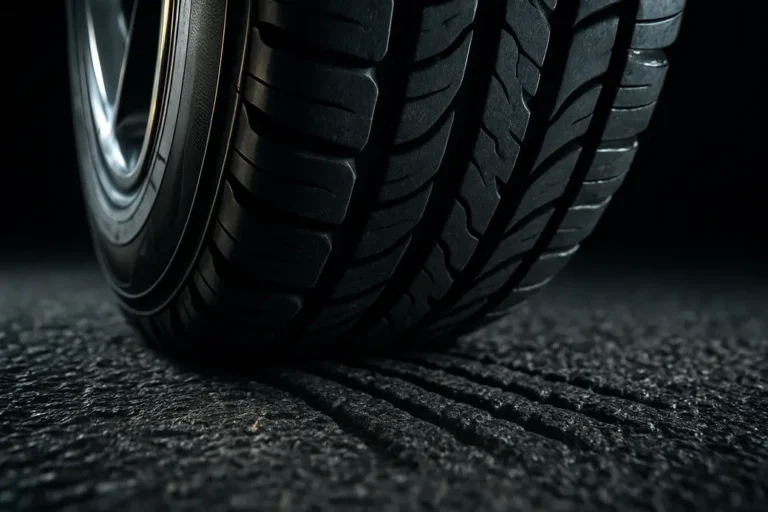
What is tire grip and how does it affect vehicle performance?
Tire grip refers to the ability of a tire to maintain contact and adhesion with the road surface, directly affecting vehicle control and safety. It determines how well a vehicle can accelerate, brake, and corner without slipping or losing control.
Good tire grip allows drivers to maintain stability and responsiveness, essential for effective handling and reducing stopping distances. Without adequate grip, tires can skid or slide, compromising the driver’s ability to control the vehicle during maneuvers, especially in adverse conditions.

How do tires grip the road surface through tire traction mechanics?
Tires grip the road primarily through a combination of friction and deformation, known as tire traction mechanics. When a tire contacts the road, the rubber surface conforms slightly to the texture of the road, creating microscopic interlocking that generates grip.
This grip arises from two main forces: adhesive forces between the tire rubber and the road, and the mechanical interlocking caused by tread patterns pressing into surface irregularities. The rubber’s elasticity allows it to stretch and mold around surface roughness, while the tread channels water away to maintain contact. Together, these factors determine how tires stick to the road and provide traction for acceleration, braking, and turning.
What factors influence tire grip and tire adhesion on different surfaces?
Several factors influence tire grip and adhesion, including the road texture, surface conditions, and tire properties. Rough surfaces provide more mechanical interlocking, improving grip, whereas smooth or polished surfaces reduce tire adhesion.
Environmental conditions like wetness, ice, or snow greatly impact grip by altering the friction between tire and road. Temperature also plays a key role, as rubber compounds behave differently when cold or hot. Additionally, tire inflation pressure and load distribution affect contact area, altering effective grip.
- Road surface roughness
- Moisture and presence of contaminants
- Temperature effects on tire rubber
- Tire inflation and load
| Road Condition | Grip Level | Primary Factor | What Helps Most |
|---|---|---|---|
| Dry asphalt | High | Rubber adhesion | Summer compound |
| Wet asphalt | Medium | Water evacuation | Deep tread + high wet-grip rating |
| Shallow standing water | Medium–Low | Aquaplaning risk | Speed reduction + tread depth |
| Snow (loose) | Low | Sipe biting edges | Winter tire with sipes |
| Ice | Very Low | Surface adhesion | Winter compound |
| Cold < 7°C (dry road) | Medium–Low | Rubber stiffness | Winter or all-season tire |
How do tire tread design and tire material influence the effectiveness of tire grip?
Tire tread design and material composition are critical in optimizing tire grip performance. Tread patterns, including grooves and sipes, enhance grip by channeling water away from the contact patch to prevent hydroplaning and increase mechanical traction on rough surfaces.
The rubber compound used in the tire influences grip by balancing softness, durability, and temperature adaptability. Softer compounds provide better adhesion but wear faster, while harder compounds last longer but may lose grip, especially in cold conditions.
Effective tyre grip functioning relies on a combination of the right tread design for the intended surface and suitable material that maintains flexibility and friction under various driving conditions.
Why is tire grip crucial for driving safety, especially on wet roads?
Tire grip is essential for driving safety because it directly impacts a vehicle’s ability to maintain control during acceleration, braking, and cornering. On wet roads, tire grip is especially critical as water reduces friction and increases the risk of hydroplaning.
Effective tire grip on wet surfaces prevents sliding and skidding by ensuring the tire maintains contact with the road. Without sufficient grip, stopping distances increase, and the vehicle becomes harder to control, leading to higher chances of accidents in wet weather conditions.
What are common misconceptions about how tire grip works?
A common misconception is that tire grip depends solely on friction between the rubber and the road surface. While friction is important, the actual grip is also influenced by tire deformation and tread design, which help create mechanical interlocking with the road.
Another misconception is that softer tires always provide better grip; however, this only applies under certain conditions. Tire grip varies depending on temperature, road texture, and tread, meaning harder tires can sometimes perform better in specific environments. Understanding these nuances clarifies how tire grip truly functions.
How can drivers improve their tire grip for safer driving conditions?
Drivers can improve tire grip and overall tire traction by maintaining proper tire care and choosing tires suited to their driving environment. Steps to enhance grip include:
- Regularly checking and maintaining correct tire pressure to ensure optimal contact with the road
- Inspecting tire tread depth and replacing worn tires promptly to preserve traction
- Selecting tires designed for the prevalent weather conditions, such as winter tires for snow and rain
- Avoiding harsh driving habits that can overheat or damage tires, reducing grip effectiveness
Additionally, keeping tires clean and free from debris improves how the rubber contacts the surface. Being mindful of load distribution and vehicle balance can also enhance the effective grip during cornering and braking.
Frequently Asked Questions
How does tire grip vary between different types of vehicles, like cars and motorcycles?
Tire grip differs due to contact patch size and tire shape specific to each vehicle type.
Can tire grip be significantly affected by the age of the tire regardless of tread wear?
Yes, tire compounds harden over time, reducing grip even if the tread looks fine.
Does driving speed influence the effectiveness of tire grip during maneuvers?
Higher speeds reduce tire grip effectiveness, increasing the risk of slipping or losing control.
What is the contact patch and why does its size matter for grip?
The contact patch is the small area of tire rubber in direct contact with the road at any given moment — roughly the size of a hand. A larger contact patch increases the grip available for braking and cornering, while a smaller one limits traction. Contact patch size is influenced by tire width, inflation pressure, and vehicle load: slight underinflation increases the patch area, while overinflation shrinks it.
Do wider tires always provide more grip than narrower ones?
Not necessarily. Wider tires offer a larger contact patch, which can improve grip on dry roads. But on wet or snowy surfaces, narrower tires can outperform wider ones — a narrower patch concentrates more pressure on the road, helping the tire cut through water or snow. Compound and tread design typically have a greater impact on real-world grip than width alone.