
What is the rolling resistance meaning and how is it defined?
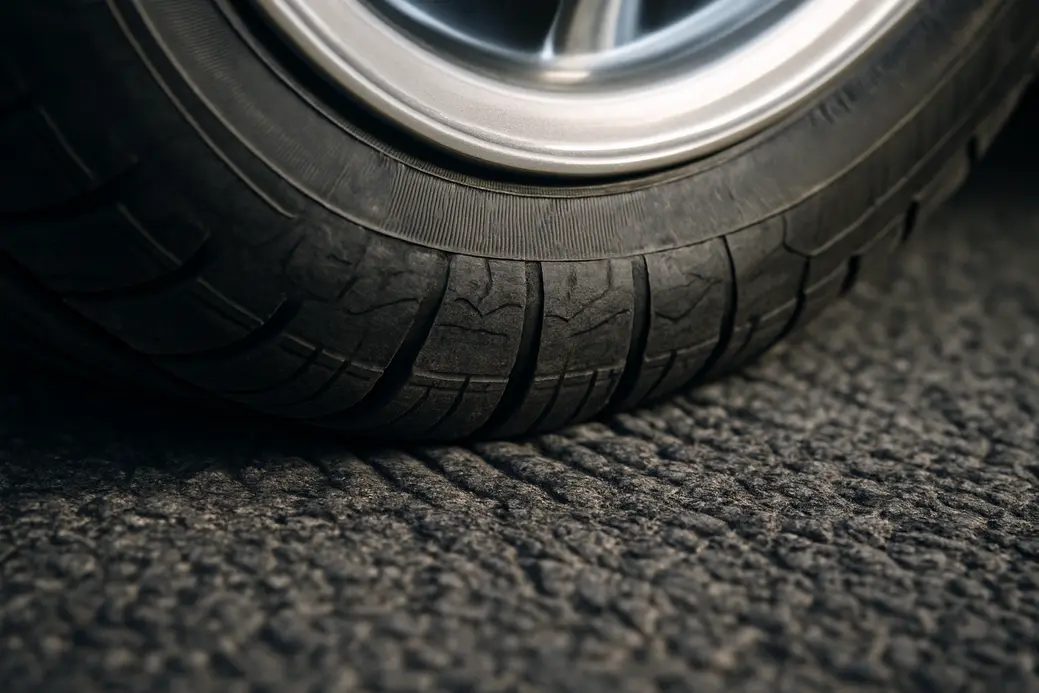
Rolling resistance refers to the force that opposes the motion of a rolling object, such as a vehicle tire or a bicycle wheel, as it moves across a surface. It is defined as the energy lost due to the deformation of the tire and the surface it rolls on, resulting in resistance against forward movement.
This concept explains why it takes effort to keep wheels turning even on flat surfaces. Rolling resistance arises mainly from the continuous deformation of the tire’s material as it presses against the ground, and from interactions with the road surface. The greater the rolling resistance, the more energy is needed to maintain a constant speed. It is typically measured as a coefficient, representing the ratio of the force resisting motion to the load on the tire. Understanding this helps in designing tyres and vehicles for improved efficiency and performance.
How does rolling resistance affect vehicle and bicycle performance?
Rolling resistance directly impacts the efficiency and performance of both vehicles and bicycles by determining how much energy is required to keep moving. Higher rolling resistance means more effort or fuel is needed to overcome the friction between the tires and the road, reducing overall efficiency.
In cars, increased rolling resistance leads to greater fuel consumption and reduced mileage. For bicycles, high rolling resistance can make pedalling harder and reduce speed. Conversely, low rolling resistance tyres require less energy to roll, improving speed and fuel economy. Factors such as tyre material, tread design, and inflation pressure significantly influence rolling resistance, making it a crucial consideration for performance optimisation in transportation.
What does high rolling resistance mean for energy consumption and vehicle dynamics?
High rolling resistance means a greater amount of energy is required to move the vehicle because of increased frictional forces between the tires and the road surface. This leads to higher rolling friction, also known as rolling drag, which reduces overall efficiency.
From a vehicle dynamics perspective, high rolling resistance can negatively affect acceleration and increase fuel consumption as the engine works harder to overcome this additional drag. It can also cause quicker tyre wear and diminished handling performance, making it an important factor to manage for both economic and safety reasons.
What does low rolling resistance signify and why is it beneficial?
Low rolling resistance signifies reduced frictional losses between the tyre and the rolling surface, allowing a vehicle or bicycle to move more easily and efficiently. This lower friction means less energy is wasted overcoming resistance, which benefits fuel economy and rider effort.
The benefits of low rolling resistance include improved fuel efficiency, faster speeds with less effort, and reduced tyre wear. In electric and conventional vehicles, it translates to longer range and lower emissions. Tyre manufacturers often use specialised materials and designs to achieve low rolling resistance without sacrificing grip or safety, making it a key metric in tyre and vehicle design.
Why does rolling resistance matter for fuel economy and environmental impact?
Rolling resistance plays a critical role in fuel economy because it determines how much additional energy a vehicle must expend to maintain motion. Lower rolling resistance means less fuel consumption, directly translating to lower carbon emissions and a reduced environmental footprint.
Vehicles with high rolling resistance consume more fuel, increasing greenhouse gas emissions and accelerating resource depletion. Reducing rolling resistance through better tyre technology and maintenance helps improve energy efficiency while supporting sustainability goals. This makes rolling resistance a significant factor in efforts to reduce the environmental impact of transportation.
What are common applications of rolling resistance across different vehicle types?
Rolling resistance is relevant in multiple vehicle types, including passenger cars, trucks, buses, bicycles, and even trains. In all cases, managing rolling resistance optimises energy consumption, improves performance, and reduces costs.
- Passenger cars use low rolling resistance tyres to enhance fuel economy.
- Commercial trucks focus on balancing load capacity and rolling resistance to reduce operating expenses.
- Bicycles benefit from tyres designed to minimise rolling resistance, aiding speed and endurance.
- Trains, though less affected by tyre deformation, consider rolling resistance in wheel and track design.
Control of rolling resistance is essential in each context for efficiency and environmental impact.
How can rolling resistance be summarized to aid general understanding?
Rolling resistance is the opposing force that slows down rolling objects due to deformation and friction. It is a key factor in determining how much energy is needed for movement. Lower rolling resistance improves efficiency, fuel economy, and performance, while higher resistance increases energy use and cost. Understanding this concept helps explain why tyre choice and maintenance matter for all rolling vehicles.
| Factor | High Rolling Resistance | Low Rolling Resistance |
|---|---|---|
| Energy loss per km | High — greater tire deformation generates more heat | Low — less deformation, minimal heat loss |
| Fuel economy impact | Negative — engine works harder to maintain speed | Positive — less engine effort needed |
| Tread life | Shorter — greater stress on rubber compound | Longer — reduced mechanical strain on tread |
| Typical tire type | Winter, off-road, wide high-performance | LRR touring, A-grade summer, EV-specific |
| Contact patch deformation | Large and frequent | Smaller and controlled |
| EU label fuel rating | D–E | A–B |
Frequently Asked Questions
Can weather conditions affect rolling resistance?
Yes, wet or icy conditions can increase rolling resistance by affecting tire grip and surface deformation.
Does tire size influence the rolling resistance of a vehicle?
Larger or wider tires generally have higher rolling resistance due to increased contact area with the road.
How often should tire pressure be checked to optimize rolling resistance?
Tire pressure should be checked at least once a month to maintain optimal rolling resistance and performance.
Does tire temperature affect rolling resistance?
Yes, cold tires have higher rolling resistance. As the tire warms to operating temperature, rolling resistance typically drops by 20–30%, which is why fuel consumption is slightly higher at the start of a journey.
Can overinflating a tire reduce rolling resistance?
Yes, overinflation reduces the contact patch and lowers rolling resistance, but at the cost of reduced grip and accelerated center tread wear. It is not recommended as a fuel-saving strategy.


