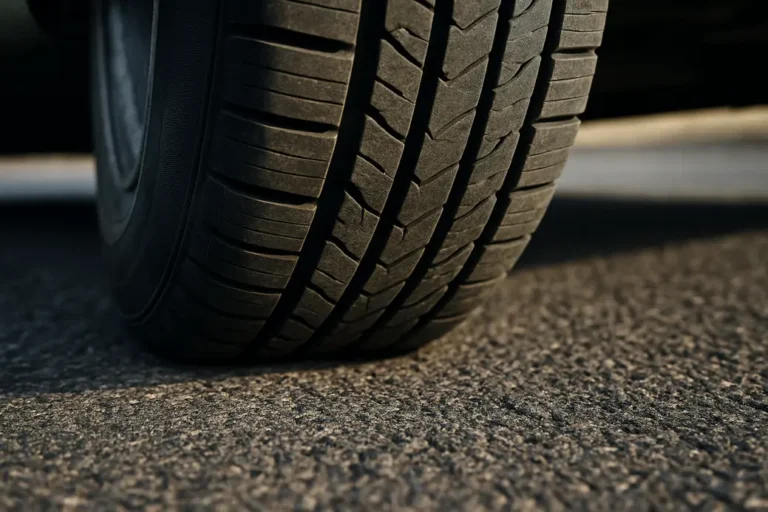
What does ‘hard tires’ mean and what are their key properties?
Hard tires refer to tyres made from a firmer rubber compound that is less flexible than softer variants. Their defining characteristic is a high level of rigidity in the rubber, which results in increased resistance to deformation under stress. Firm or hard rubber tyres typically have less grip initially but offer greater durability over time.
Key properties of hard tires include:
- A stiffer rubber compound compared to medium or soft tires
- Reduced rolling resistance, which can enhance fuel efficiency in road cars
- Slower heat build-up and better heat resistance, contributing to extended tyre life
- Lower grip levels in cooler conditions or on low-friction surfaces
These attributes make hard tyres distinct in how they interact with the road or track surface, providing a trade-off between longevity and grip.
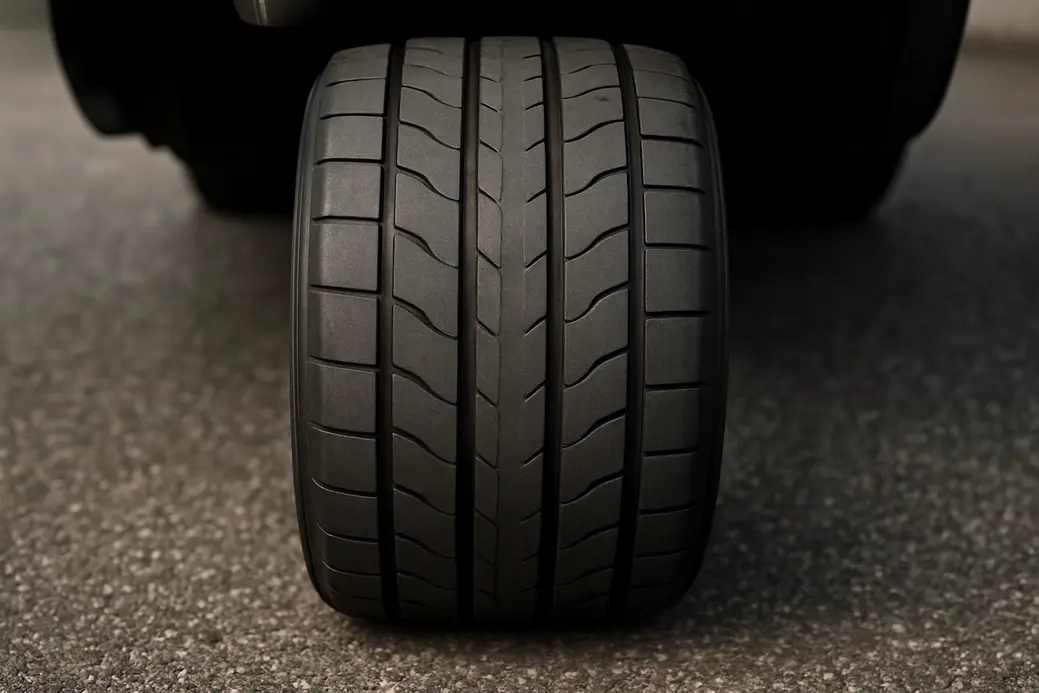
How do hard tires differ from medium and soft tires in racing performance?
Hard tires differ from medium and soft tires mainly in compound hardness, affecting grip, wear rate, and temperature range. Hard tire compounds offer less initial grip than soft tires, which means slower cornering speeds at the start, but they maintain performance longer over race distance.
In contrast, soft tires provide maximum grip early on but degrade quickly, requiring more frequent changes. Medium tires strike a balance between grip and durability, sitting between hard and soft in performance characteristics. The key differences in racing performance are:
- Hard tires grip less but last longer, ideal for long stints
- Soft tires deliver superior grip but have higher wear rates
- Medium tires moderate grip and durability, suited for variable race conditions
This makes hard tires preferable when tyre longevity and stability in high temperatures are essential factors in race strategy.
What are the advantages and disadvantages of using hard tires on the track?
The main advantages of hard tires on the track include their durability and heat resistance, making them well-suited for long race stints and abrasive surfaces. Durable tires minimize pit stops and maintain consistent lap times over an extended period.
However, disadvantages include reduced grip and slower warm-up periods compared to softer compounds. Hard tires are also less responsive in cooler conditions and on tracks with less abrasive surfaces. To summarise:
Advantages:
- Increased tyre lifespan due to harder rubber compound
- Lower risk of overheating and blistering at high temperatures
- Better fuel efficiency through reduced rolling resistance
Disadvantages:
- Reduced traction and slower cornering speeds initially
- Longer time needed to reach optimal operating temperature
- Less effective in cool or wet conditions due to lower grip
Teams and drivers must weigh these trade-offs carefully when choosing tyres for specific track conditions.
When and why should hard tires be used in racing and everyday driving?
Hard tires should be used in racing scenarios where durability and heat resistance are priorities, such as long-distance endurance events or tracks with abrasive surfaces. They are ideal when teams aim to reduce the number of pit stops and maintain tyre performance throughout extended stints.
In everyday driving, hard tires can be chosen for longevity and cost-effectiveness, particularly in regions with hot climates or on rough road surfaces. They are less prone to rapid wear and punctures, making them practical for daily use. Situations that call for hard tires include:
- Racing on circuits with high tyre degradation rates
- Long race stints where tyre management is crucial
- Driving on rough, uneven, or hot road conditions in normal vehicles
The hard tyres’ meaning extends beyond racing into practical use, where balancing grip and lifespan guides tyre selection for various purposes.
How does tire hardness affect grip, wear, and overall durability of hard tires?
Tire hardness has a direct impact on grip, wear rate, and durability. Hard tires feature a rubber compound with less elasticity, which reduces the tyre’s ability to conform to surface irregularities. This decreases mechanical grip, especially when the tyre is cold or on low-friction surfaces.
However, the firmer compound resists abrasion better, significantly improving durability and reducing wear. This means hard tires can endure longer distances before performance drops. Their slower heat build-up also prevents premature degradation from overheating. The relationship can be broken down as follows:
- Grip: Harder tires offer less grip initially due to less surface conformity and slower warm-up but can provide consistent traction once at operating temperature
- Wear: They have greater resistance to wear, reducing the frequency of tire changes in racing and needing fewer replacements in everyday driving
- Durability: The stiff compound improves resistance to cuts, punctures, and thermal breakdown, extending overall tire lifespan
This balance means that hard tires optimise longevity and stable performance while compromising some immediate traction, making them well-suited for conditions demanding endurance over outright grip.
Frequently Asked Questions
Can hard tires be used effectively in wet weather conditions?
Hard tires generally provide less grip in wet conditions, making them less effective and safe.
Do hard tires require different tire pressure settings compared to softer tires?
Hard tires typically need higher pressures to optimize performance and reduce heat build-up.
How do hard tires impact vehicle handling on twisty or technical tracks?
Hard tires reduce immediate grip, potentially making handling less responsive on technical tracks.